ไทย
ไทย 中文 (中国)
 العربية


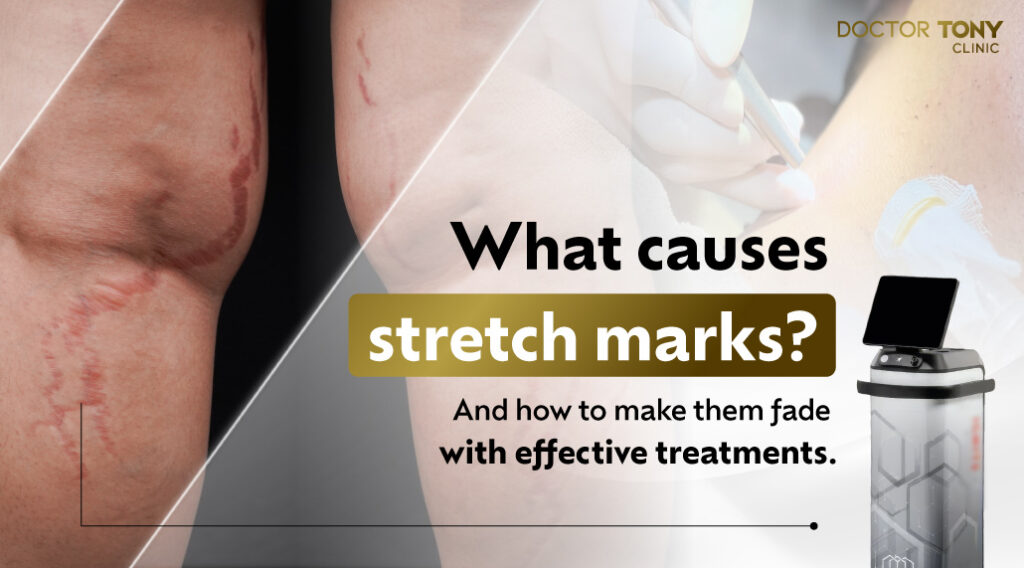
Stretch marks might look difficult to treat, but the truth is—they can fade significantly if you start caring for them early and choose the right approach. While they’re not harmful, they can affect confidence—especially when they appear in visible areas.
Today, there are both at-home skincare options and medical treatments that can effectively reduce stretch marks. Understanding the causes and choosing the right treatment will help you see clearer results, safely and effectively.
What Are Stretch Marks?
Stretch marks (striae) are tiny tears in the dermis (the middle layer of the skin). They happen when the skin is stretched too quickly, causing the collagen and elastin structure to break down. This results in line-like marks on the skin. Striae scars typically start as red or purple lines and, over time, turn white, which is harder to treat because the skin has lost much of its elasticity.


What Causes Stretch Marks?
Striae scars aren’t a dangerous skin disease—they’re a form of scarring within the dermis caused by rapid skin stretching. Common causes include:
- Rapid weight gain – Skin expands too fast, especially on the belly, thighs, and hips
- Pregnancy – Belly skin stretches quickly, combined with hormonal changes
- Muscle growth – Muscles expand faster than skin can adapt (e.g., arms, shoulders)
- Growth spurts in teens – Fast body changes during puberty
- Hormones & genetics – Affect skin elasticity, making some people more prone
- Steroid use – Thins the skin, increasing the risk of Striae scars


Red Stretch Marks vs. White Stretch Marks
Striae scars are generally divided into two stages based on color, which reflects how deep the skin damage is. Each stage responds very differently to treatment.
Red Striae scars (Striae Rubra) – Early Stage
These are fresh marks caused by rapid skin stretching. Collagen and elastin fibers have torn, and there’s still inflammation and blood flow in the area, giving them a red, pink, or purple color. This is the best time to treat them because the skin can still heal well.
White Striae scars (Striae Alba) – Chronic Stage
These are older marks, where inflammation has faded. Collagen has been damaged and disorganized, leaving thin, sunken, white or silvery lines. Creams alone usually won’t help much at this stage—medical treatments are needed to stimulate new collagen.
Feature | Red Stretch Marks | White Stretch Marks |
Appearance | Red, pink, or purple | White, silvery, or skin-colored |
Stage | Early | Chronic |
Skin condition | Inflammation, blood vessels present | Thin, sunken, disorganized collagen |
Sensation | May feel itchy or irritated | Usually no sensation, but visibly sunken |
Response to treatment | Good response, fast results | Usually no sensation, but visibly sunken |


Most Common Areas for Stretch Marks
- Striae scars often appear where skin stretches rapidly—due to fat storage or muscle growth. Common areas include:
- Belly – Very common during pregnancy or rapid weight gain
- Thighs & hips – Often during puberty or hormonal changes
- Chest – Can occur during puberty or breastfeeding
- Buttocks – From fat storage or lower-body workouts
- Upper arms – Especially near the armpits, from weight gain or muscle growth
- Lower back – Horizontal lines, often in teens during growth spurts


How to Treat Stretch Marks
Treatment options depend on the stage of your stretch marks. Generally, they fall into two main categories: at-home skincare and medical procedures.
At-Home Skincare (Creams & Topicals)
- Best for early-stage (red) stretch marks when the skin can still repair itself.
- Moisturizers – Intense hydration helps reduce itching and improves elasticity
- Vitamin A creams (Tretinoin / Retinal) – Boost cell turnover and collagen production
- Consistency is key – Regular use over time helps marks fade
Medical Treatments (Lasers & Skin Technologies)
- Best for white or deep Striae scars where creams alone aren’t enough.
- Fractional CO2 Laser Program or Erbium Laser – Resurfaces deep skin layers, stimulates collagen, improves texture


- Morpheus 8 Burst – Uses RF energy deep into the stretch mark layer to boost collagen, making marks shallower and lighter
- Radiesse (CaHA) – A biostimulator that helps restore skin, reduce wrinkles, and fade Striae scars
- RF Microneedling – Tiny needles + radiofrequency energy tighten skin and improve elasticity, ideal for atrophic (sunken) marks


Which Treatment Is Right for You?
For Red Striae scars (Early stage – easier to treat)
- Topical vitamin A (Tretinoin / Retinal) – Speeds up skin renewal and collagen production. Start with low strength, use at night (avoid if pregnant).
- Redness-reducing lasers (V-Beam / Dye Laser) – Quickly reduce redness and even out skin tone.
For White Striae scars (Chronic stage – needs technology)
- Fractional lasers (CO2 / Erbium) – Stimulate collagen and resurface skin
- Morpheus Ignite 8 Burst – Deep RF energy targets Striae scars directly, improving depth, color, and elasticity
- Radiesse (CaHA) – Collagen stimulator that helps fade Striae scars and smooth skin
- RF Microneedling (e.g., Dermapen) – Needles + RF energy repair deep skin, good for sunken or uneven marks
Most chronic-stage Striae scars require multiple sessions, and sometimes a combination of technologies, for the best results.
FAQ (Frequently Asked Questions)
They usually don’t disappear 100%, but they can fade significantly and become much smoother with proper treatment.
Red stretch marks are easier to treat because the skin can still heal well.
For early red marks, maybe. But for white marks, creams alone usually aren’t enough—medical treatments are often needed.
Most people feel a warm or light prickling sensation, but it’s generally tolerable. Numbing options are available.
It depends on your skin and the depth of the marks. Most people start seeing results after 3–5 sessions or more.
Summary
Stretch marks happen when skin stretches too quickly, leading to red or white lines that require different treatment approaches. For the best results, start early and choose the right method for your skin type. If you’re unsure where to begin, having a doctor assess your skin directly will help create a plan that’s safe and effective.
At Doctor Tony Clinic, we offer personalized skin analysis and choose the right technology for each case—so your results look natural, your skin feels smoother, and you see clear, long-term improvement.
Read this article in Thai: รอยแตกลาย เกิดจากอะไร? วิธีแก้รอยแตกลายให้จางลงอย่างเห็นผล
Trusted Medical References
- American Academy of Dermatology – Stretch marks are a form of dermal scarring caused by rapid skin stretching.
- Mayo Clinic – Explains causes, risk factors, and treatment options.
- National Institutes of Health – Clinical research on laser treatments and collagen remodeling.
- PubMed – Evidence supporting fractional laser and RF treatments for skin repair.